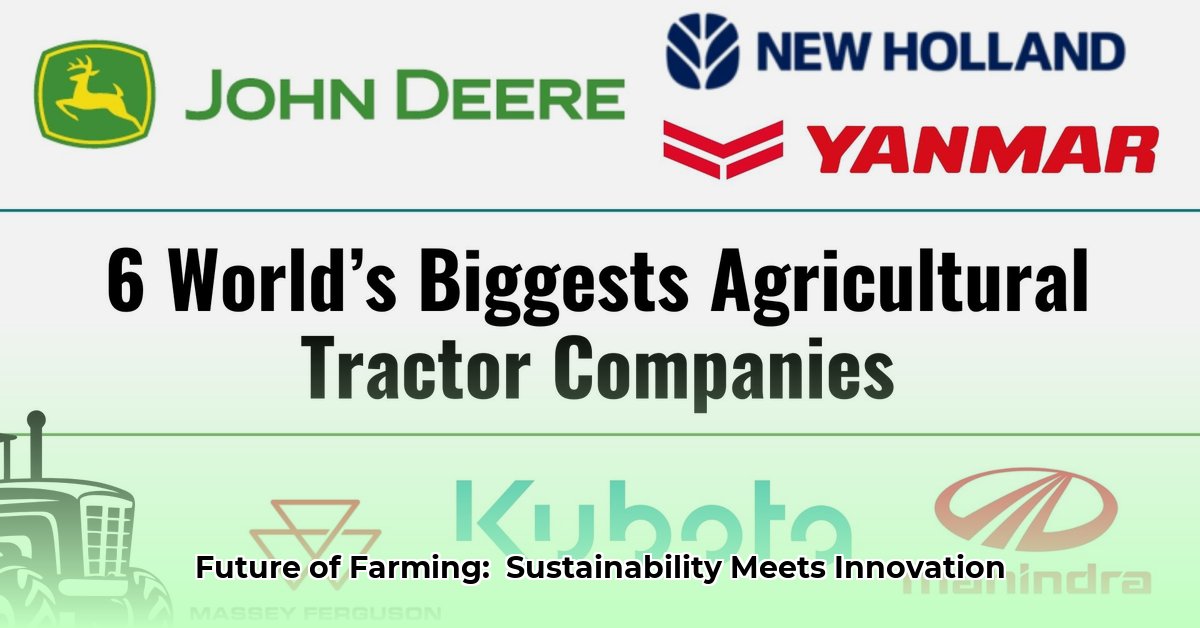
The global agricultural landscape is undergoing a transformation, driven by the increasing demand for sustainable and efficient farming practices. This shift is profoundly impacting the tractor industry, a sector dominated by a few key players who are constantly innovating to meet these evolving needs. This report examines the leading tractor companies, their contributions to sustainable agriculture, and the technological advancements shaping the future of farming.
The Leading Players: Shaping the Future of Agriculture
A handful of manufacturers dominate the global tractor market, each with its own strengths and areas of focus. These companies are not only producing powerful machinery but are also at the forefront of developing sustainable and technologically advanced solutions for modern agriculture.
John Deere: Precision Agriculture Pioneer
John Deere is a global leader, renowned for its robust equipment and commitment to precision agriculture. Their focus on data-driven technologies, such as GPS guidance and automated systems, enables farmers to optimize resource utilization and maximize yields while minimizing environmental impact. John Deere's extensive dealer network ensures widespread accessibility and support for farmers worldwide.
AGCO: A Diverse Portfolio for Global Markets
AGCO Corporation offers a diversified portfolio of agricultural machinery, catering to a wide range of farm sizes and operational needs across numerous global markets. Their brands, including Massey Ferguson and Challenger, are known for reliability and adaptability to diverse agricultural environments. AGCO is actively investing in sustainable technologies and solutions to support environmentally conscious farming.
Mahindra & Mahindra: A Powerful Presence in Developing Markets
Mahindra & Mahindra is a major player, particularly in developing countries. Their tractors are known for their affordability and suitability for smaller farms and challenging terrains. This focus on accessibility makes a significant contribution to global food security by providing crucial equipment to farmers in emerging economies. Mahindra is also steadily integrating advanced technologies into its product line to improve efficiency and sustainability.
Other Notable Manufacturers
Beyond these industry giants, numerous specialized manufacturers contribute to the sector. Smaller companies often focus on niche segments, such as compact tractors or sustainable designs, further diversifying the options available to farmers based on their unique operational needs.
Technological Advancements: Transforming Farming Practices
The integration of advanced technologies is revolutionizing agricultural practices. Precision farming—utilizing GPS, sensors, and data analytics—is becoming increasingly prevalent, enabling farmers to make informed decisions about resource allocation, crop management, and overall farm productivity.
Precision Farming: Optimizing Resource Use
GPS-guided tractors, automated steering systems, and sensor-based monitoring are improving accuracy and efficiency in tasks such as planting, spraying, and harvesting. This leads to significant reductions in resource waste—less fuel, fertilizer, and water—improving both farm profitability and environmental sustainability.
Sustainable Materials and Designs: A Greener Future
The industry is actively researching and developing sustainable materials and designs. Efforts include exploring biofuels, electric powertrains, and recyclable components to minimize the environmental impact of tractor manufacturing and operation. The long-term implications of these changes are a reduction in greenhouse gas emissions and a decrease in the reliance on fossil fuels.
Sustainability: A Critical Imperative
Sustainable agriculture is no longer a niche pursuit; it's a vital necessity. The reduction of greenhouse gas emissions, the responsible use of resources, and the preservation of soil health are central concerns. Leading manufacturers are actively responding to these pressing challenges.
Challenges and Opportunities in the Sector
The tractor industry faces a multitude of challenges. These include global supply chain volatility, evolving regulatory landscapes, and the growing threat of cybersecurity risks associated with the increasing reliance on connected technology. However, these challenges also present significant opportunities for innovation, strategic partnerships, and market diversification.
Actionable Insights for Stakeholders
Navigating this evolving landscape requires a strategic approach for all stakeholders:
For Manufacturers: Increased investment in R&D, focusing on sustainable technologies and precision farming solutions; diversification of product portfolios to meet diverse global needs; strengthening of distribution networks for improved market access; proactive engagement with regulatory bodies.
For Farmers: Careful assessment of return on investment when adopting precision agriculture technologies; securing appropriate financing for new equipment; participation in training programs to fully utilize technological advancements; adaptation of farming techniques to optimize precision agriculture benefits; investment in robust data management systems.
For Governments: Implementation of supportive policies promoting sustainable farming practices; provision of financial incentives and subsidies to encourage technological adoption; investment in robust agricultural training programs; development of supportive infrastructure for precision agriculture; establishment of clear standards for sustainability assessment in agricultural equipment.
Conclusion: The Future of Farming
The tractor industry is at a pivotal moment. The future of agriculture hinges on the industry's ability to embrace sustainable practices and technological advancements. The challenges are significant, but the rewards—enhanced productivity, environmental sustainability, and global food security—are immense. The next chapter in this evolving narrative promises a fascinating blend of innovation, sustainability, and a continued commitment to feeding the world.